
Plumbing Checks in an Arizona Home Built on a Slab
October 19, 2026
The plumbing section of an inspection report covers the pipes, fixtures and water heater you can see and use. In the homes we inspect, especially newer ones, the water supply lines usually run up the walls and through the attic, while drain lines often run through the slab and out of sight. This post explains what Arizona's standards of practice for home inspectors require for plumbing, what they leave out, how we run our checks, and where a sewer scope fits. For the full picture, start with our guide to what a home inspection covers in Arizona.
The plumbing part of a home inspection is a visual look at the water supply piping, the drains and the water heater. It also includes running the fixtures to see how water flows and drains. Anything buried in the ground or hidden inside walls or concrete is outside what the inspector can see.
What Arizona Standards Require in a Plumbing Inspection
Arizona requires certified home inspectors to follow the standards of practice adopted by the Arizona Chapter of the American Society of Home Inspectors. The plumbing section of those standards asks the inspector to observe the following.
- The interior water supply piping, including its supports and insulation
- Fixtures and faucets
- Functional flow and functional drainage
- Leaks in the supply and drain systems
- Cross connections
- Traps and the drain, waste and vent piping, with their supports and insulation
- The water heater, its normal operating controls, its automatic safety controls, and its chimneys, flues and vents
Interior fuel storage equipment and supply piping, drainage sump pumps and waste ejector pumps are on the list as well.
A few of those terms have set meanings in the standards. Functional flow is a reasonable flow at the highest fixture in the house while another fixture is running. Functional drainage means a drain empties in a reasonable amount of time and does not overflow when another fixture drains at the same time. A cross connection is a physical link between drinking water and any source of contamination.
What the Inspector Runs and Describes
The standards ask the inspector to operate all plumbing fixtures, including their faucets, and all exterior faucets attached to the house. Jetted bathtubs are operated as well. Running water through the house is how flow, drainage and leaks at the fixtures can be seen.
Here is how we run those checks. We start by checking the water pressure at an exterior spigot. That gives us an idea of what flow should look like at the fixtures.
Then we run the fixtures together in each area of the house. In the kitchen, the faucet and dishwasher run at the same time. In each bathroom, the faucets, shower and toilet all run together. That shows both flow and drainage.
- 1We check the water pressure at an exterior spigot.
- 2In the kitchen, the faucet and dishwasher run at the same time.
- 3In each bathroom, the faucets, shower and toilet all run together.
The report also describes a few basics about the system. It names the visible water supply piping materials and the visible drain, waste and vent piping materials. It describes the water heating equipment and its energy source. It also gives the location of the main water shutoff valve and the main fuel shutoff valve.
The standards limit which valves an inspector must turn. They do not require the inspector to operate any valve except toilet flush valves, fixture faucets and hose faucets. So the main water shutoff is located and described, but the standards do not require the inspector to turn it. The standards also do not require the inspector to operate automatic safety controls, such as those on a water heater.
What We Check on the Water Heater
On the water heater, we check the age, the venting and the electrical. We also check the pressure and temperature relief, the water shutoff, the gas shutoff and the condensation lines.
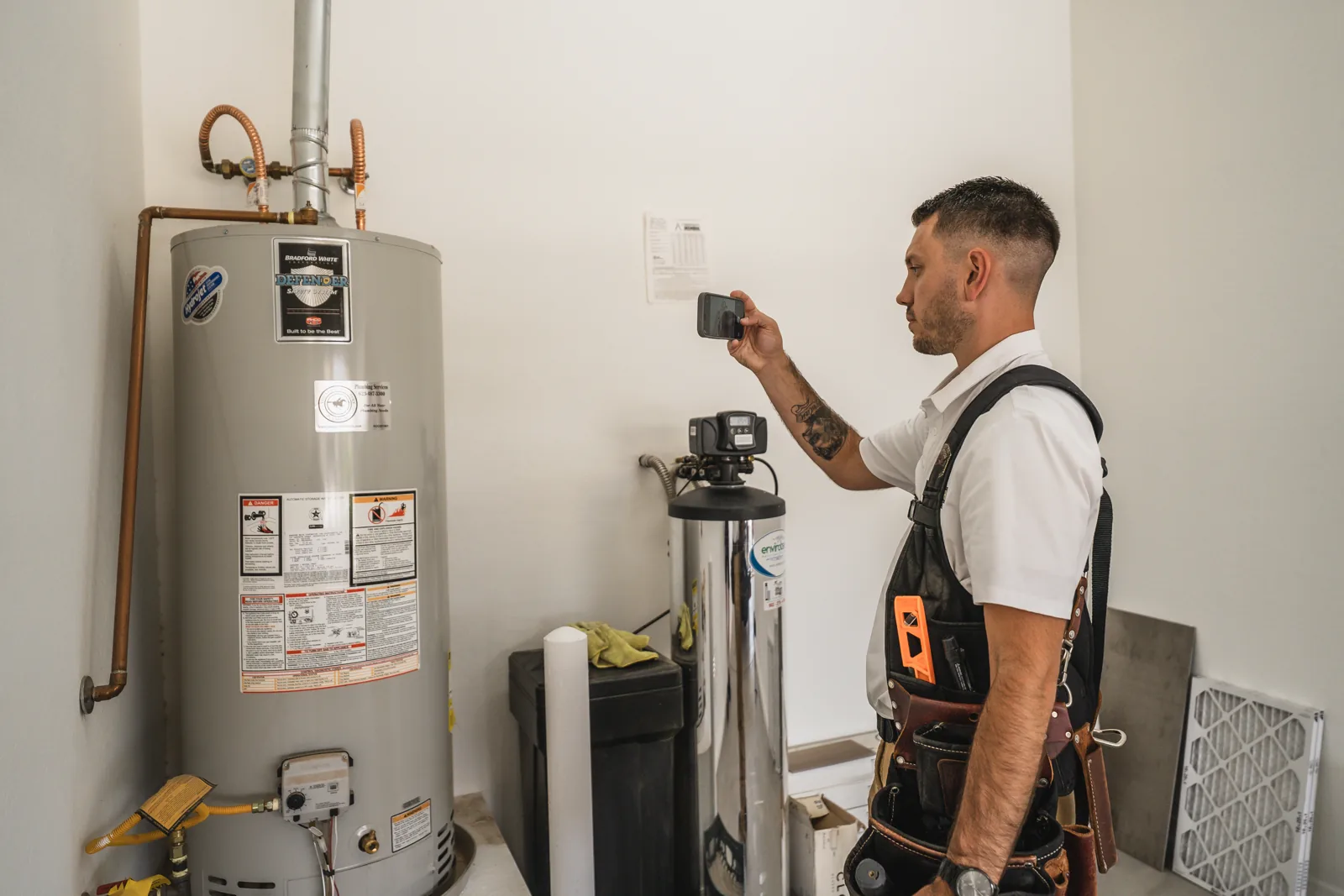
The write-up we make most often comes from a water heater that was replaced without replacing the parts that connect to it. The new tank is often a different size or shape, so those parts no longer line up or fit correctly.
That can lead to kinked water lines and fuel lines that are stretched too far. It can also leave pressure and temperature relief lines that no longer flow correctly.
What Stays Out of View Under a Slab
An inspection under Arizona's standards is visual and not technically exhaustive. It will not identify concealed conditions or latent defects, which are problems hidden from view. Among the general exclusions, the standards do not require a report on underground items. Piping that runs through or under a slab cannot be seen, so its condition is outside a standard inspection.
The plumbing section adds its own list. The standards do not require the inspector to observe the following.
- Water conditioning systems
- Fire and lawn sprinkler systems
- Foundation irrigation systems
- On-site water supply quantity and quality
- On-site waste disposal systems
When we see a water softener or an irrigation system, we give it a visual look for any obvious leaks or deficiencies. We do not test these systems or fully check them.
The standards also do not require the inspector to state how well anti-siphon devices work, or to decide whether the water supply and waste disposal systems are public or private. On-site water quality, in the standards, means the bacterial, chemical, mineral and solids content of the water. We do not offer water testing.
The inspector can report signs of water that show up inside the house. The standards require signs of water getting into the building, and signs of abnormal or harmful condensation, to be reported. We check the ceilings, walls and attic in every house with a moisture meter and a heat gun to help bring water damage or staining to light. Those checks are not a test of the piping under the slab.
We also look for any signs of water runoff or leaking. Watching your water bill can be very helpful for spotting a leak underground. That is a tip for once the home is yours, not a test we perform during the inspection.
Where a Sewer Scope Comes In
A standard home inspection stops at the visible plumbing. The line from the house to the city sewer or the septic tank is underground, and a normal inspection does not show its condition. That line is where a sewer scope comes in.
A sewer scope runs a camera from an accessible cleanout through to the connection and records the whole pass. Findings go in the report with still images, and you can see the footage. The scope looks for root intrusion at joints and connections, for cracks, breaks and separations, and for blockages and heavy build-up. It also looks for bellies and offsets that hold water, and it notes the general condition and material of the line.
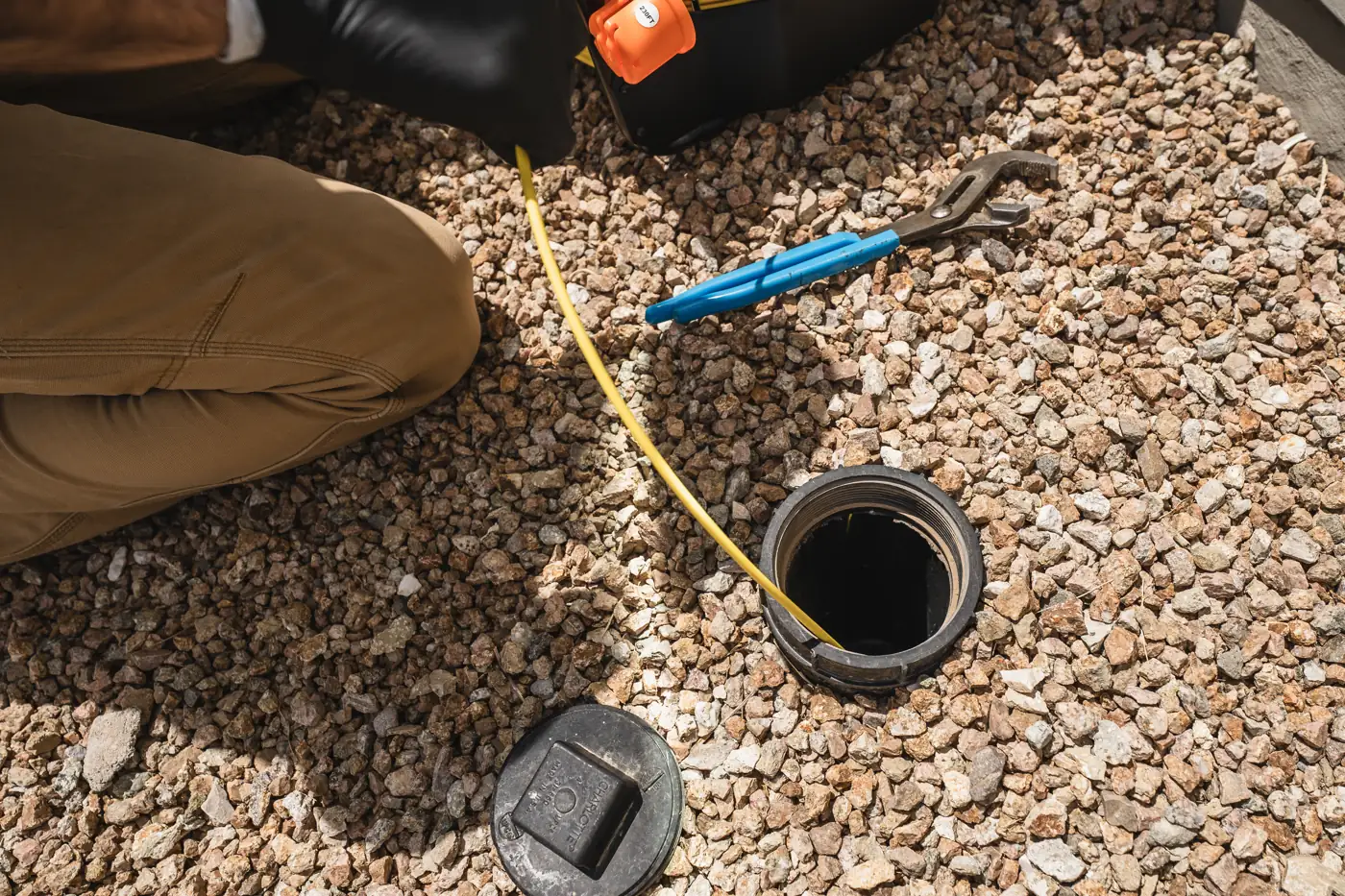
If there is no accessible cleanout and the camera cannot get in, we say so rather than guess. The scope covers the line from the house to the tank. A full septic evaluation of the tank and the disposal field is a separate service that we do not perform.
We recommend a sewer scope on every home, new or old. It is a good way to verify the condition of any sewer line.
Reading the Plumbing Section of Your Report
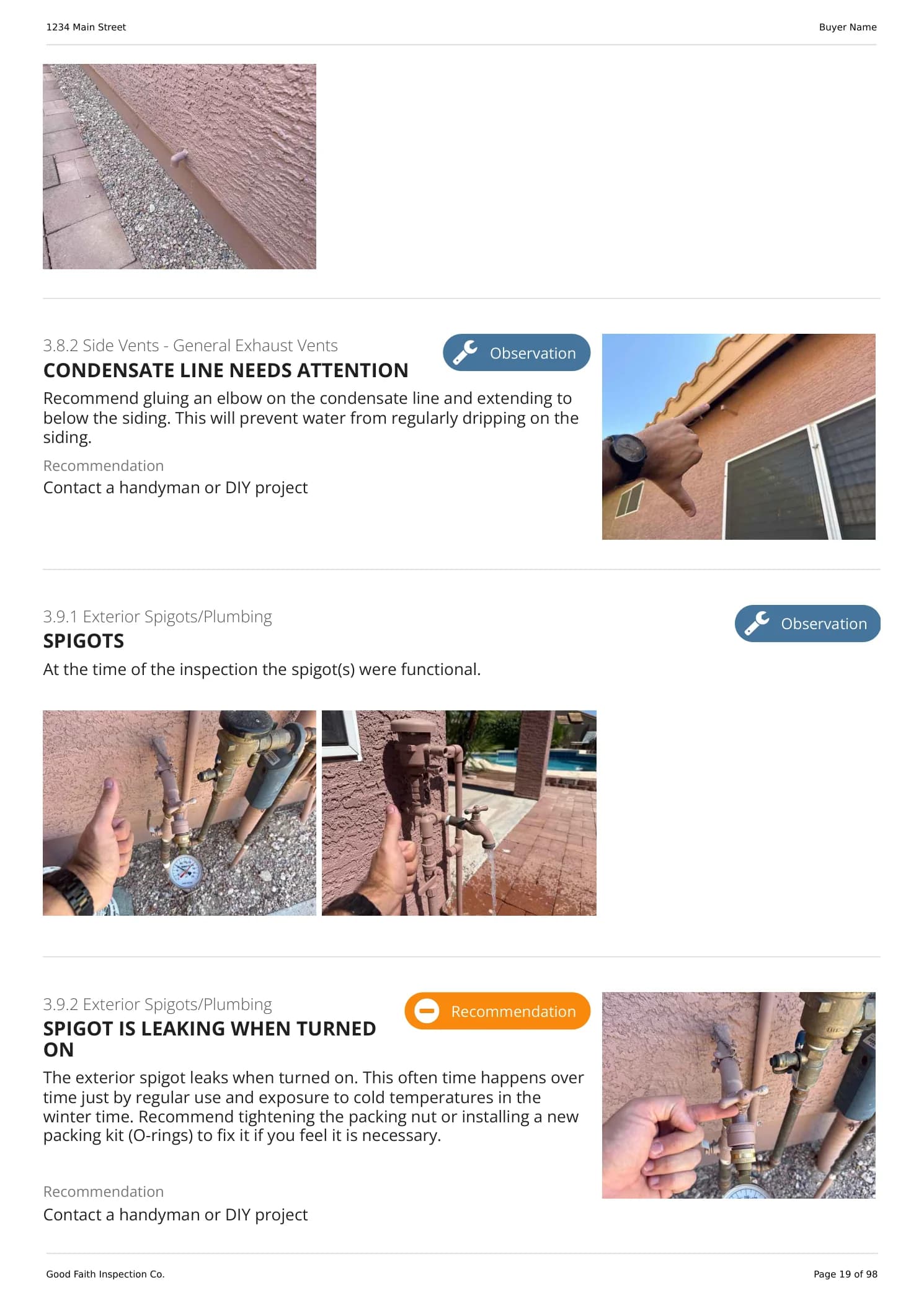
Your full report arrives within 24 hours. Each finding carries a color: red marks a hazard, orange marks a repair recommendation, and blue marks something worth knowing. Plumbing findings use the same colors as every other part of the house. Our guide to reading a color-coded inspection report goes through each of the three colors in turn.
Red
Safety hazards
Orange
Recommended repairs
Blue
Worth knowing
Some questions sit outside the report the standards require. The cause of a major repair, the way to correct it and the cost of that correction are not required parts of the report. Neither is an estimate of how long a component will last.
If you have one plumbing concern, a single-item inspection can look at that one item on its own. Once repairs are done, a re-inspection can look at up to five individual items or one full system. You are welcome to join us on the inspection and ask about the plumbing as we run it. Attending is your choice.
Our job is to help you understand what you are buying. Your job is to decide if what you're buying is what you were hoping for.
Frequently Asked Questions
More from What a Home Inspection Covers in Arizona
Deficiency or Routine: How to Read Your Inspection Report
Your report is in and the clock is running. Here is how the color coding sorts findings by priority, and what the colors do not decide for you.
Roof Inspection for Arizona Home Buyers
What Arizona's standards require an inspector to check on the roof, what they leave out, and how roof findings show up in your color-coded report.
Electrical Panel Checks in an Arizona Home Inspection
What Arizona's standards ask a home inspector to check in the electrical system, what they leave out, and how panel and wiring findings land in your report.
What a Home Inspection Can Tell You About HVAC in Phoenix
Your inspection period is short and the air conditioner is on your mind. This is what the inspection checks on heating and cooling, and what Arizona's standards do not require an inspector to check.