
Attic and Insulation Checks in an Arizona Home Inspection
October 19, 2026
Most of a home inspection happens in rooms you have already walked through. The attic is different, because it is a space you may never see for yourself. Arizona's standards of practice for home inspectors ask the inspector to go into the attic, look at the insulation and ventilation, and report signs of water. This post explains what those standards require, what they leave out, and what we check and find in practice. The rest of the house is covered in our guide to what a home inspection covers in Arizona.
The attic part of a home inspection is a visual look at the unfinished space above the ceilings. The inspector goes in when it is safe and practical, notes how the space was inspected, and reports what can be seen. Most homes we inspect in the greater Phoenix area are built on slab foundations, with no crawl space. In those homes, the attic is the unfinished space the inspector enters.
What Arizona Standards Require in the Attic
Arizona requires certified home inspectors to follow the standards of practice adopted by the Arizona Chapter of the American Society of Home Inspectors. Under those standards, the inspector must enter underfloor crawl spaces and attic spaces, with a few exceptions covered below. The inspector must also report the methods used to inspect them. The insulation and ventilation section asks the inspector to observe the following.
- Insulation and vapor retarders in unfinished spaces
- Ventilation of attics and foundation areas
- Kitchen, bathroom and laundry venting systems
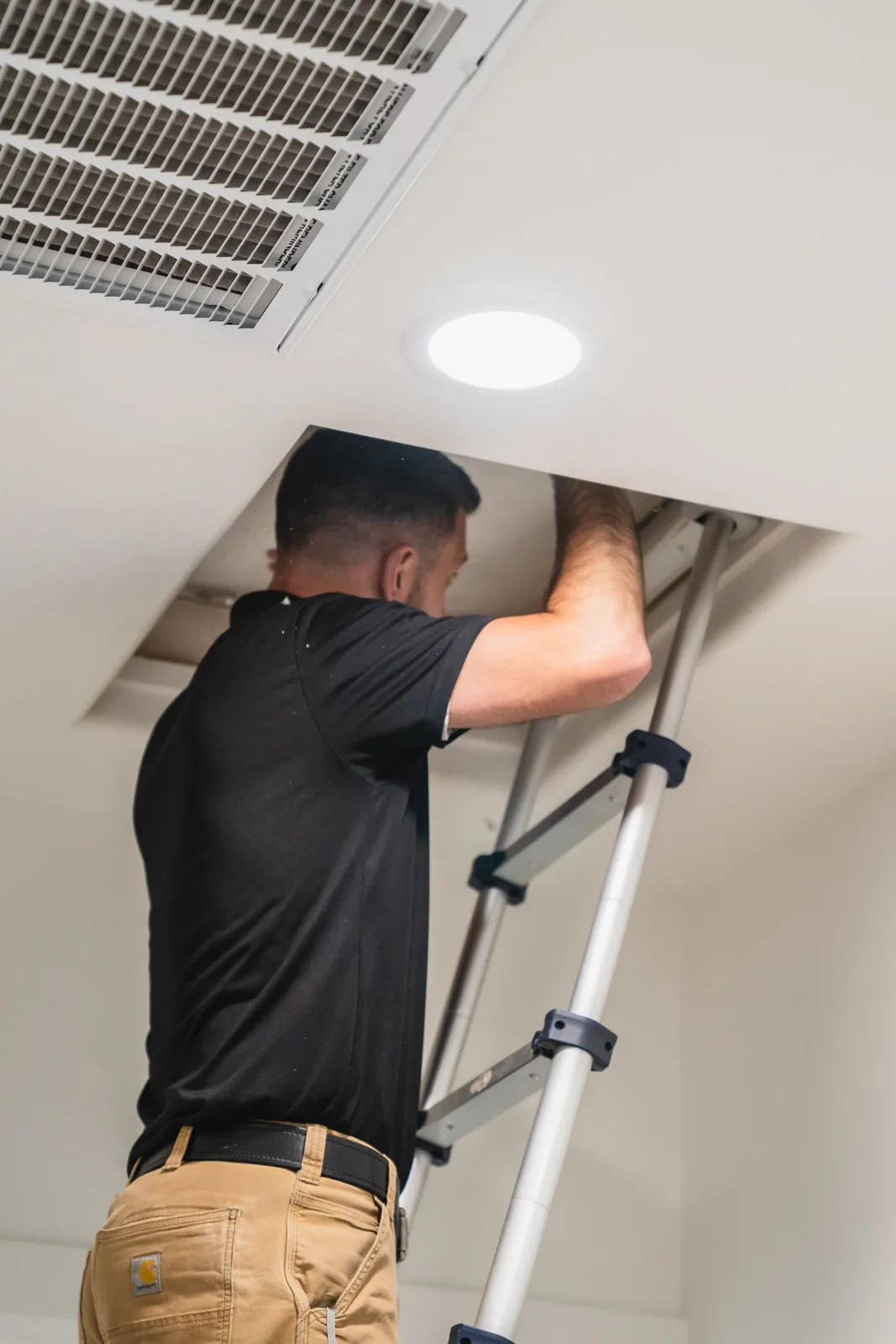
The inspector must also describe whether insulation and vapor retarders are present or absent in unfinished spaces. In the standards, to describe means to report in writing what type something is, or other features that set it apart from similar items. So the report records what the inspector could see of the insulation, not just whether there was a problem with it.
One more duty from the structural section matters up here. The inspector must report signs of water getting into the building and signs of condensation on building components. The interiors section repeats that duty for the inside of the house, where it covers abnormal or harmful condensation.
When the Inspector Does Not Have to Enter the Attic
The duty to enter the attic has four exceptions. Under the standards, the inspector does not have to go in when any of the following is true.
- Access is obstructed
- The clearance is less than a nominal 16 by 24 inches
- Entry could damage the property
- Dangerous or adverse situations are suspected
The standards define dangerous or adverse situations as ones that threaten injury to the inspector, or that require special protective clothing or safety equipment. A general rule points the same way. The standards do not require the inspector to enter any area that may damage the property or be dangerous to the inspector or other people.
Stored belongings can matter too. The standards do not require the inspector to move personal items, furniture, equipment or debris that blocks access or the view. If boxes are stacked under the attic opening, the inspector may not be able to get in.
This is why the method matters. The report states the methods used to inspect the attic. The standards do not require a report on any component or system that was not observed. If part of the attic was out of reach, that is worth knowing before you decide what comes next.
What We Do When the Attic Is Hard to Reach
When the attic is blocked, we ask the agent to check with the sellers. With the sellers' written permission, we can move items to get in, or cut the paint where the hatch has been painted shut. If there is still no way for us to get in, we tell the agent and the clients so they can plan.
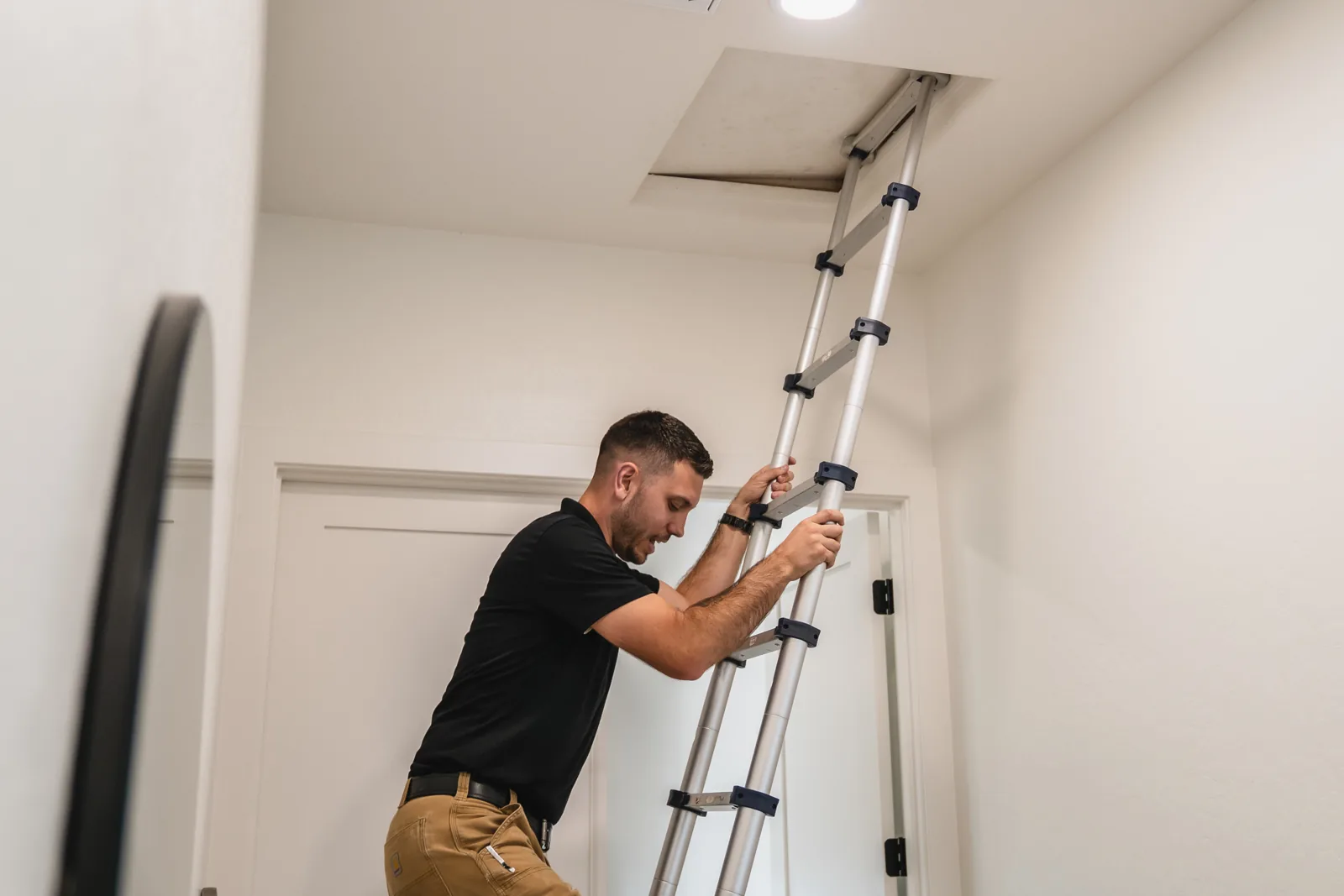
If the opening is tight but we can get through, we go as far as we safely can and look at as much of the attic as possible. The report then recommends an additional attic access, so the rest of the attic can be reached.
Insulation, Ventilation and Venting in the Attic
Ventilation is on the required list as well. The inspector observes the ventilation of attics and foundation areas. In the standards, to observe means to look at the primary function of a system or component and report on its condition. For ventilation, it is a visual check, not a measurement.
The kitchen, bathroom and laundry venting systems are part of this section too. The standards do not require a report on venting equipment that is built into a household appliance. So the standards cover the house's venting systems, but not the appliance's own built-in venting.
We note the type of insulation and the type of ventilation in the attic. We also note any areas where insulation is missing or low.
All exhaust vents should vent to the exterior of the house. We note every vent we can get to, along with deficiencies such as vents that are not connected, vents held with duct tape that will dry out, and damaged vents.
Common Insulation Problems in Valley Attics
Insulation that is poor, disturbed or missing is a very common attic finding in Valley homes. Wind is a common cause. It comes into the attic through the roof vents and can push the insulation out of place.
Missing insulation is more common than many buyers expect. People go into the attic to work on things and disturb it. Others remove insulation while doing add-on work and do not replace it.
Insulation plays a large part in how well a home cools and heats, and that matters in Valley heat. These insulation findings always get an orange repair recommendation in our report. The standards do not require an inspector to calculate the efficiency of any system. Our note describes the condition of the insulation we could see.
What the Attic Inspection Leaves Out
An inspection under Arizona's standards is visual. It is not technically exhaustive, which the standards define as using measurements, instruments, testing and calculations to reach scientific or engineering findings. It will not find concealed conditions or latent defects, which are problems hidden from view. For the attic, the standards do not require the inspector to do the following.
- Report on insulation and vapor retarders that are concealed
- Disturb insulation
- Move stored items, furniture or debris that block access or visibility
- Calculate the strength, adequacy or efficiency of any system or component
- Determine whether environmental hazards such as mold, mildew or other fungus are present
The insulation is looked at where it can be seen. The standards do not require the inspector to pull it back or measure how well it performs. We do not offer mold or air quality testing. What we do report are signs of water and condensation, because the standards require them.
How We Check for Water in the Attic and Ceilings
The standards set the minimum. They are not meant to stop an inspector from reporting on more than they require, and that is where our moisture checks come in.
We check the ceilings, walls and attic in every house as standard practice. We use a moisture meter and a heat gun to help bring water damage or staining to light. In the attic, the moisture meter helps us tell whether a stain is an old one or comes from an active leak. This goes further than the visual look the standards describe, and it gives the report more to go on when a stain or damp spot shows up.
Because the attic sits right under the roof, it helps to read this section next to the roof section of your report. Our post on roof inspections for Arizona home buyers explains what that part of the inspection covers.
Reading the Attic Section of Your Report
Your full report arrives within 24 hours. Every finding is color-coded: red marks a hazard, orange marks a repair recommendation, and blue marks something worth knowing. That color system applies to the attic just as it does to every other part of the house. Our guide to reading a color-coded inspection report explains what each color means and where to start.
The standards do not require an inspector to report on how long a component will last or what caused the need for a major repair. Repair methods, materials and costs are also outside what the standards require.
If you have one attic concern, such as a stain on the ceiling below it, a single-item inspection can look at that one item on its own. For the whole house, see our home inspection service. You are welcome to come along on the inspection and ask questions about the attic as we go, though you do not have to attend.
Our job is to help you understand what you are buying. Your job is to decide if what you're buying is what you were hoping for.
Frequently Asked Questions
More from What a Home Inspection Covers in Arizona
Deficiency or Routine: How to Read Your Inspection Report
Your report is in and the clock is running. Here is how the color coding sorts findings by priority, and what the colors do not decide for you.
Roof Inspection for Arizona Home Buyers
What Arizona's standards require an inspector to check on the roof, what they leave out, and how roof findings show up in your color-coded report.
Electrical Panel Checks in an Arizona Home Inspection
What Arizona's standards ask a home inspector to check in the electrical system, what they leave out, and how panel and wiring findings land in your report.
What a Home Inspection Can Tell You About HVAC in Phoenix
Your inspection period is short and the air conditioner is on your mind. This is what the inspection checks on heating and cooling, and what Arizona's standards do not require an inspector to check.