
When you buy a home in Greater Phoenix, the home inspection looks at the plumbing you can see. The main sewer line is not part of that, and a sewer scope is how you find out what condition it is in. At Good Faith Inspection Co., a sewer scope can be added to a home inspection or booked on its own. This guide explains what a scope is, why a standard inspection leaves the line out, how the camera run works, and how to read the sewer section of your report.
A sewer scope inspection is a camera inspection of the main sewer line, the pipe that runs underground from the house to the city sewer or the septic tank. We put a camera down that line and record what is there. That recording shows the condition of a pipe that nothing about a normal inspection can reveal.
Why doesn't a home inspection check the sewer line?
A standard home inspection stops at the visible plumbing. Arizona requires certified home inspectors to follow the standards of practice adopted by the Arizona Chapter of the American Society of Home Inspectors. Under those standards, the inspector observes the drain, waste and vent piping inside the house, checks for leaks and functional drainage, and describes the visible drain piping materials.
The main sewer line sits outside all of that, because it is underground. The standards say inspectors are not required to report on underground items, or on any component or system that was not observed. They also describe an inspection as visual, not technically exhaustive, and say it will not identify concealed conditions or latent defects. Technically exhaustive means using measurements, instruments, testing, calculations and other means to develop scientific or engineering findings, conclusions and recommendations.
So the plumbing section of your report can describe the drains inside the house without reporting on the condition of the pipe that carries everything away from it. That is the edge of what the standards ask for, and a sewer scope is how you see past it. Our guide to what a home inspection covers in Arizona explains the rest of the inspection, and our post on what is included as standard versus an add-on explains the difference.
How is a sewer scope done?
We run the camera from an accessible cleanout through to the connection and record the whole pass. A cleanout is an opening that gives access into the sewer line. The plumbing section of our sample reports notes where the sewer cleanout is.
You get to see the footage. The pass is recorded, and the findings go in your report with the relevant stills. In our sample report, the sewer section also carries a link to view the video on the web.
- 1We run the camera from an accessible cleanout through to the connection.
- 2We record the whole pass.
- 3The findings go in your report with the relevant stills.
- 4In our sample report, the sewer section carries a link to view the video on the web.
Some homes have no accessible cleanout. If we cannot get the camera in, we tell you that rather than guessing, and we talk through the options. Older lines often lack one because a cleanout was not a consideration or requirement when they went in.
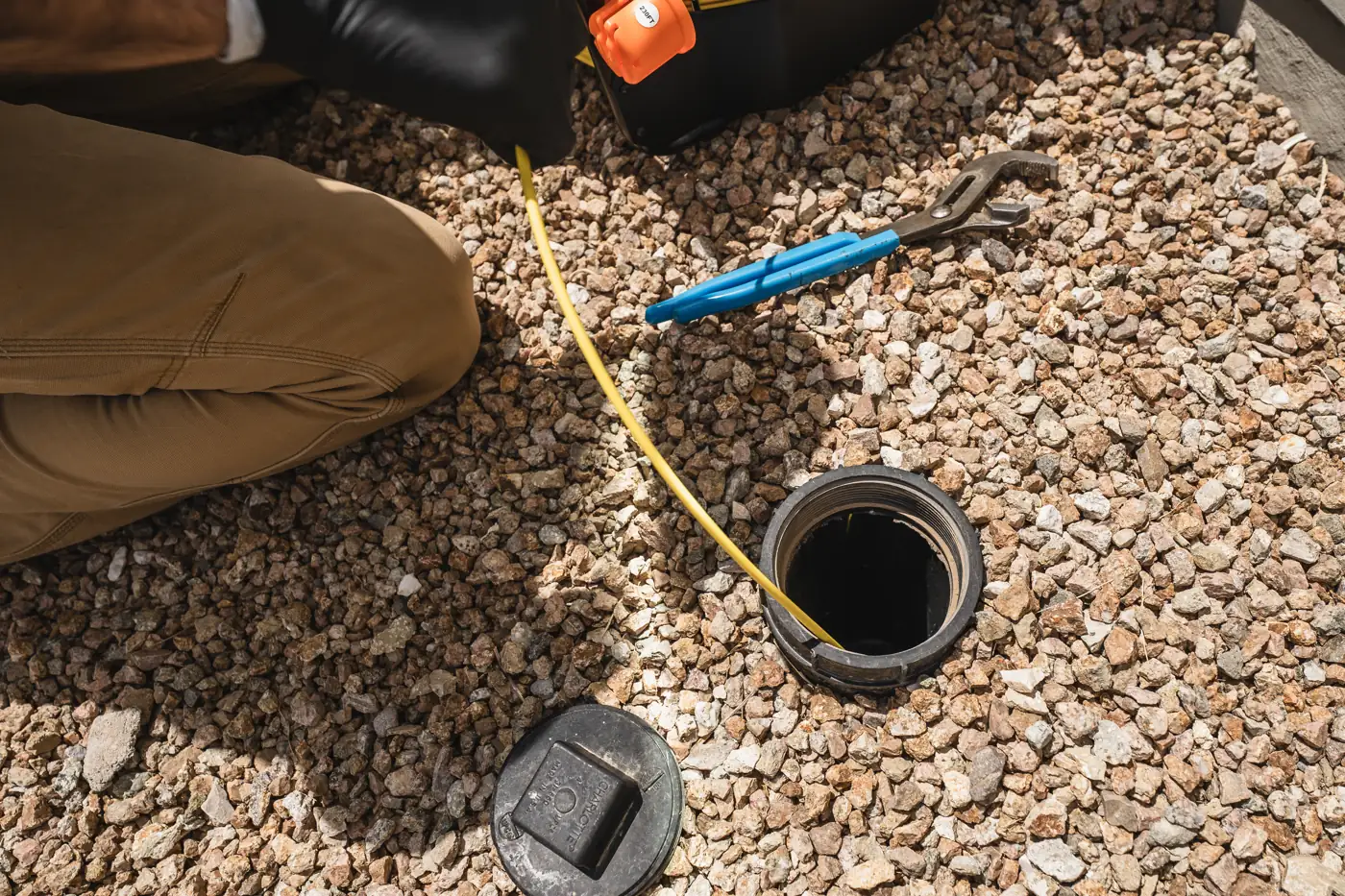
When there is no accessible cleanout outside or inside the house, we can sometimes go through a plumbing vent on the roof, if the vent is big enough. We do not pull toilets for access. If a toilet needs to be pulled, we recommend having a handyman or plumber pull it. We then come back to scope the line and honor the discounted add-on price.
Our resale sample report recommends having a cleanout installed when a line is not fully accessible, so the whole line can be seen. Whether that can happen during a sale depends on the transaction. Asking a seller to install one, or to let you install one at their home, can be difficult, so it is worth a conversation with your agent.
What does the camera look for?
The camera shows the inside of the pipe along the run. The findings we report on are:
- Root intrusion at joints and connections
- Cracks, breaks and separations
- Blockages and heavy build-up
- Bellies and offsets that hold water
- General line condition and material
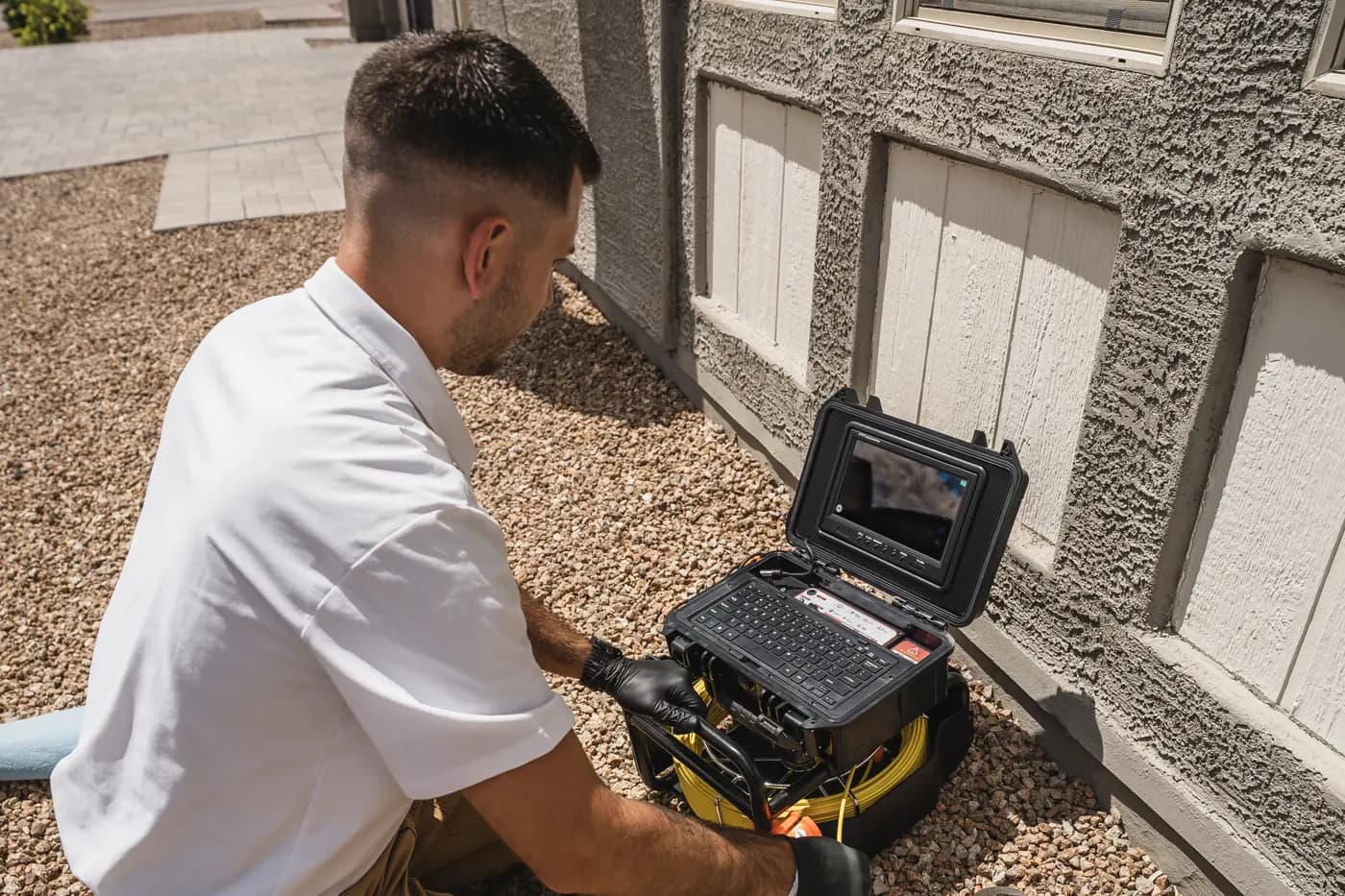
In the East Valley the common findings are roots that have gone looking for water, offsets and separations at joints where the soil has moved, and bellies — low spots that hold water and catch debris. An offset is a joint where two sections of pipe no longer line up.
Naming the pipe material is part of the job, but it is not always simple. Sewer lines come in many materials, including concrete, tile, fiberglass, PVC, ABS and cast iron. The material can be hard to identify on camera, and the line may need to be cleaned or jetted out before it can be identified properly.
Does a newer home need a sewer scope?
We recommend a sewer scope on every home, new or old, apart from the few cases below, because it is a good verification for any sewer line. Newer homes are worth scoping too. Construction debris left in a line and badly bedded pipe both turn up on young houses, and a line that was never right does not improve with age.
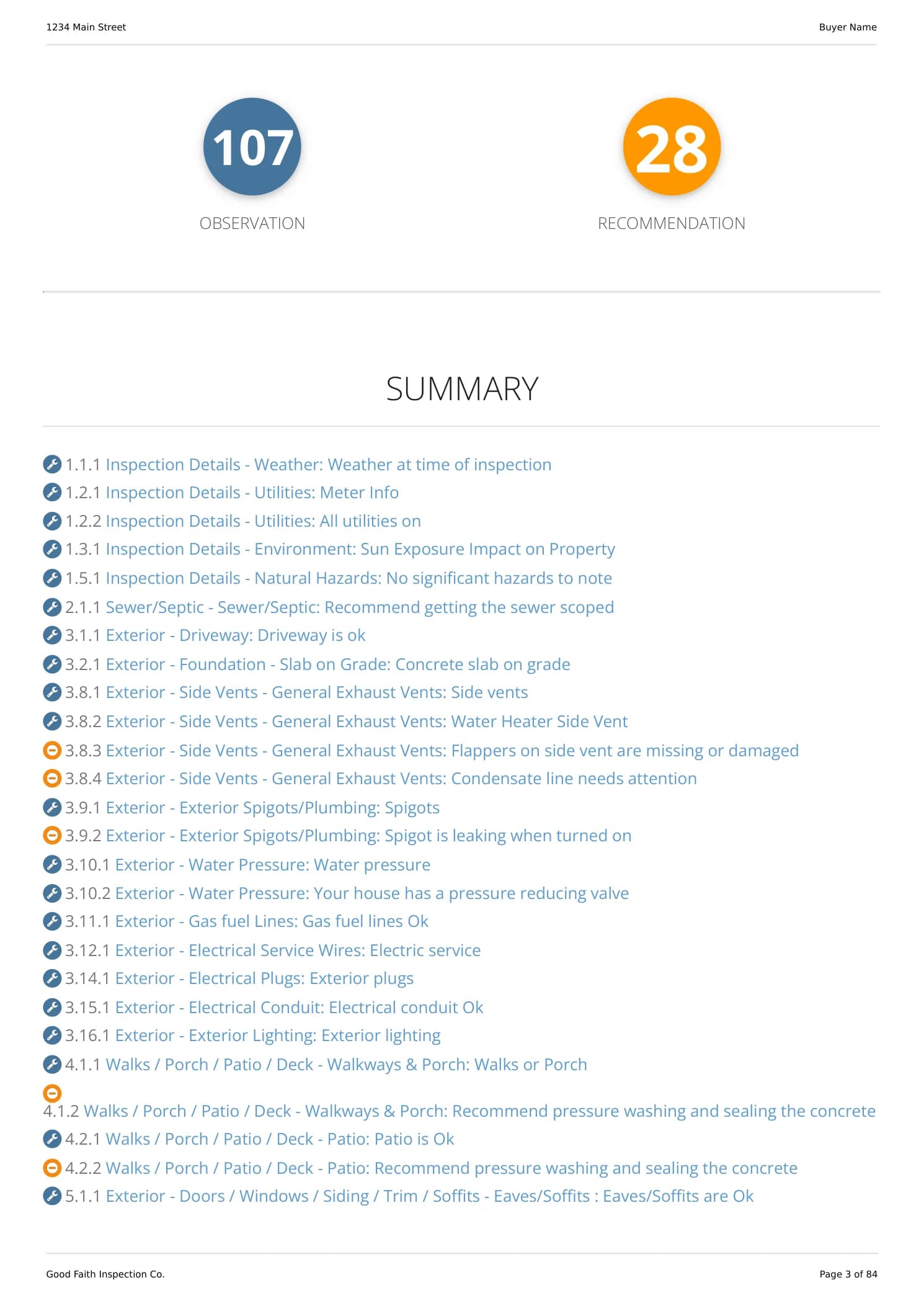
Our new-build sample report recommends getting the sewer scoped so you can get eyes on the condition of the line. It lists what we look for: breaks in the line, low spots, disconnected areas, obstructions, roots, bad connections, corrosion, and the overall condition of the line and proper flow. As the report puts it, it is better to know up front than to find a problem later, after you begin to use the water and drain lines.
There are only a few cases where a scope may not be needed. A scope may not be needed on a condo or on a mobile home in a park, because in both cases the buyer would not own the line and would not be responsible for it. On a septic home, a scope may not be needed if the company that pumped the tank also scoped the line, which we cover in the septic section below.
What does the sewer section of my report look like?
In our sample report for a resale home, the sewer scope has its own section, Sewer/Septic, near the front. It is marked as inspected, not inspected or not present, and the finding is laid out in four parts:
- Materials: what the line is made of
- Condition: what the camera showed
- Recommendation: what we suggest as a next step
- Video: a link to view the recorded pass on the web
Here is how that reads in the sample report. The line is ABS and PVC and in overall good condition, with a large bulge just after it changes to PVC. The report explains that a bulge like this is often caused by rocks or roots pushing up against the line. It recommends further evaluation as needed to find the cause and scoping the line periodically to monitor that area, and notes that if nothing changes, it becomes less of a concern.
Every finding in our reports is color-coded: red for hazards, orange for repair recommendations, blue for things worth knowing. The sewer section is labeled orange if we note a deficiency during the scope. When something is worth monitoring, we will often add a timeline to the recommendation line if one is needed, such as scoping the line again every 2 to 3 years. Our post on how to read your inspection report explains how to work through each color.
Red
Safety hazards
Orange
Recommended repairs
Blue
Worth knowing
How should I read what the scope found?
Every sewer line is in a different condition, and a line that is not perfect or new can still be in functional condition. A simple way to think about it: if waste flows to the sewer main and does not back up, in most cases the line is functioning. If it backs up at times and the causes are managed, it is still functional, but not perfect, and it needs ongoing service or maintenance.
A belly can make it harder to see the whole line clearly, but in most cases it will not stop waste from flowing to the sewer main. How the line is used matters. Showers, laundry, toilets with reasonable amounts of toilet paper, and sink drains with strainers should not create a blockage concern.
Large amounts of waste ground up by a disposal, or things like eggshells or lots of grease and fat sent down the drain, may harden and build up in the low spot over time. When that happens, the belly may need to be cleared periodically. Large amounts of toilet paper and low water flush toilets can also have an effect.
Offsets that are not perfectly aligned can still work. They may need ongoing management, with a scope run down the line to see how things are working, rather than a repair, a full replacement or sleeving the line. An old line does not always need to be replaced. If you are unsure, getting a neutral opinion on the line is a better route than being talked into work that may not need to be done.
Roots that block the line, or have the potential to, need to be cleared, and the line should then be scoped again to make sure it is working. Anyone who works on the line should re-scope it afterward to verify the work.
What you do with the findings is your decision. A line might be fine as it is, something you can live with, or in need of cleaning and a fresh scope. It might need a cleanout so the whole line can be checked, a repair or a replacement. Each of those has a cost, and the choice is yours to make with your agent or a neutral party.
Does a sewer scope cover a septic system?
On a septic home, we scope the line from the cleanout to the tank. A scope may not be needed if the company that pumped the septic tank also scoped the line. Most of the time, the pumping company does not scope the line when they pump.
A full septic evaluation, which looks at the tank and the disposal field, is a separate service we do not perform. Arizona's standards also do not require a home inspector to observe on-site waste disposal systems.
Inspection and add-on pricing, including the sewer scope, is on our pricing page.
Our job is to help you understand what you are buying. Your job is to decide if what you're buying is what you were hoping for.